ServicesRoof Inspections
Roof Inspections in Kingston, OH
We go over your roof from the shingle surface to the underside of the decking, follow any leak back to its true entry point, and document each problem with pictures. You will know which items need work now and which can safely wait.
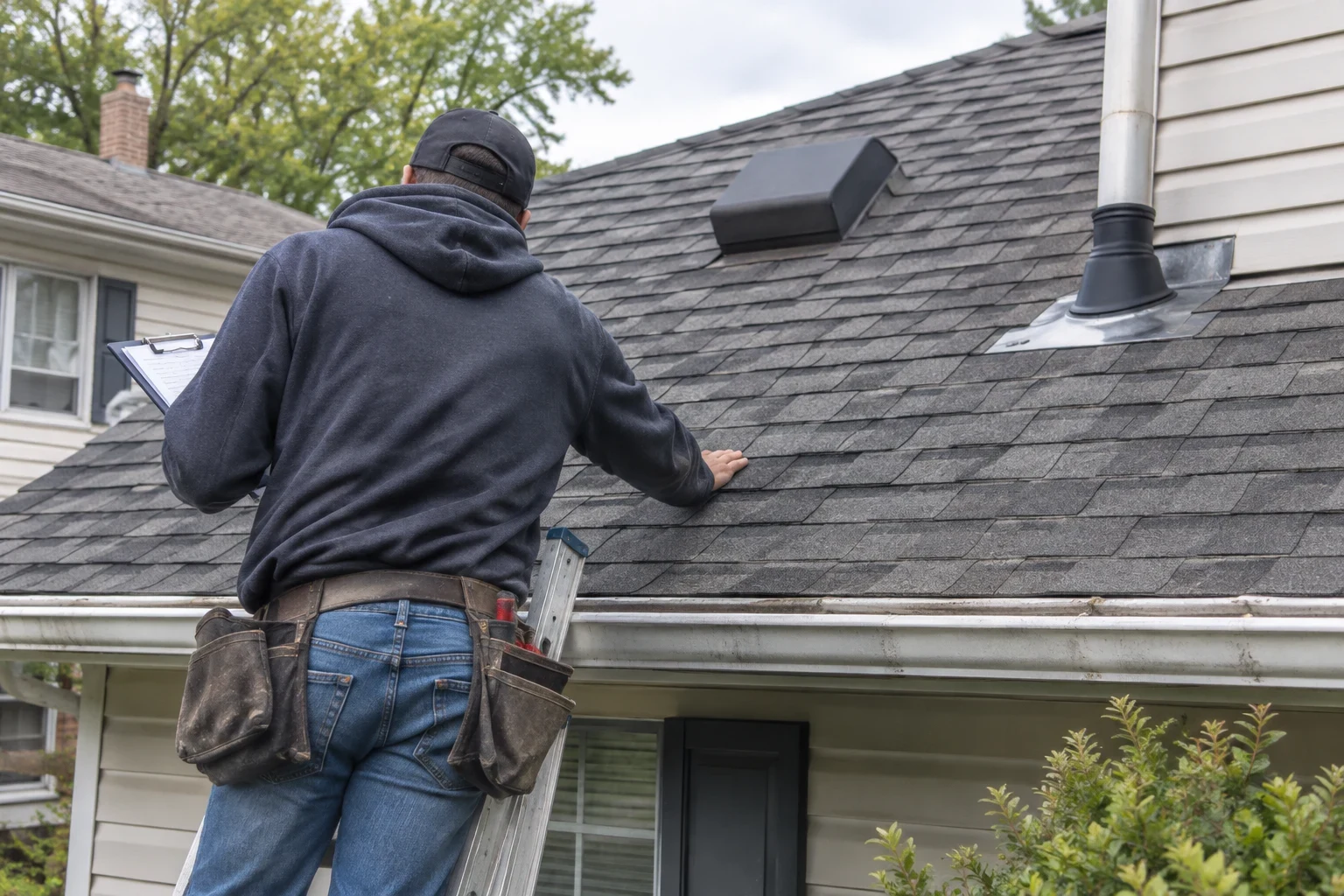
What a Roof Inspection Actually Tells You
A roof inspection is a close look at every part that keeps water out of your home: the shingles, the flashing at chimneys and sidewalls, the rubber pipe boots, the ridge, the valleys and the ventilation, plus the decking and framing you can only see from the attic. The goal is to learn why something is happening, not just that it is.
A water stain on a ceiling rarely sits right under the leak. Water slips in at a cracked boot or a lifted piece of step flashing, runs along a rafter or the top of the decking, and drips wherever it finds a low point. Patch the shingles above the stain and the leak comes back. We trace it from both sides of the roof so the repair goes where the water starts.
Inspections make sense with no leak at all, too: before you buy or sell, when your roof passes 15 years, or after a winter of freeze-thaw cycles has worked on the edges and flashing.
What We Check on Every Inspection
- Shingle condition and seal
- We check for worn-off granules, splits, edges that curl or cup, and tabs whose adhesive strip has let go. Once the asphalt underneath is exposed, sunlight breaks it down and the whole slope ages faster.
- Flashing and roof penetrations
- Chimney counterflashing, step flashing along walls, valley metal, pipe boots and vents all get a hands-on check. Leaks start at these joints far more often than in the middle of a shingled slope.
- Attic, decking and airflow
- From inside, we look for water tracks, dark or spongy decking, rusty nail points, mold and frost marks. We also compare soffit intake with ridge exhaust. A poorly vented attic cooks shingles from underneath in summer and, in winter, melts snow that refreezes into ice at the eaves.
- Eaves and edges
- Drip edge, gutters, fascia boards and soffit panels. Rot or overflow here often points to a drainage problem rather than a roofing one.
- Photo record and written summary
- Every issue is photographed and listed with where it is, what likely caused it and how urgent it is. You see the proof for yourself rather than taking our word for it.
Signs Your Roof Should Be Inspected
Stains on ceilings or upper walls
Brown rings or blistered paint mean water has been coming in for some time. The entry point can be several feet from the stain.
Granules collecting in the gutters
Some loose grit right after a new install is normal. Heavy, ongoing piles years later mean the shingles are losing their protective coating.
Curled, cracked or missing shingles
Lifted edges and missing tabs leave nail heads and underlayment exposed. Wind catches a curled edge and tears more shingles loose.
Ice dams along the eaves
A thick ridge of ice at the edge usually means heat from the attic is melting snow farther up. The meltwater pushes back under the shingles, and the fix starts in the attic.
A roof past 15 years
Plenty of asphalt roofs begin to show wear around this age. A close look shows whether yours has real life left or whether it is time to budget for roof replacement.
What Changes the Cost of Your Inspection
An inspection is billed on the time it takes to check the roof and attic thoroughly. Some roofs need far more of that time than others. We go over the cost with you on the phone before booking, so it is agreed before we arrive at your home.
Roof size and layout
A simple gable with two flat planes is quick to cover. Each valley, dormer, skylight and chimney adds another seam we have to examine at arm's length.
Steepness and height
A steep pitch or a second-story eave means more ladder work and slower, more deliberate movement to reach every part safely.
Attic access
A fold-down ladder or a walk-up stair gets us in right away. A small hatch inside a closet, or an attic with no opening at all, adds time.
Tracing a live leak
Following water back to its entry point usually takes longer than a general condition review, especially when it travels along a rafter or the decking for a few feet before it drips.
How the Inspection Day Runs
- 1
A quick phone conversation
On the call, we ask what you have spotted, roughly how old the roof is and where the attic hatch sits. That points us to the right areas before we show up.
- 2
Outside and on the roof
When the pitch and shingles allow safe footing, we walk every slope, valley and penetration. If the roof is too steep or brittle to walk, we work from ladders at the eaves and from the ground.
- 3
Inside the attic
We trace any water marks up the rafters and check the decking underside, insulation and vents. Lining up the inside evidence with the outside evidence is how we find the actual entry point.
- 4
Reviewing the findings together
Before we leave, we show you the photos one by one and explain what each means in plain language. If a small roof repair solves it, we tell you that. If the roof has reached the end, we lay out the reasons and the proof.
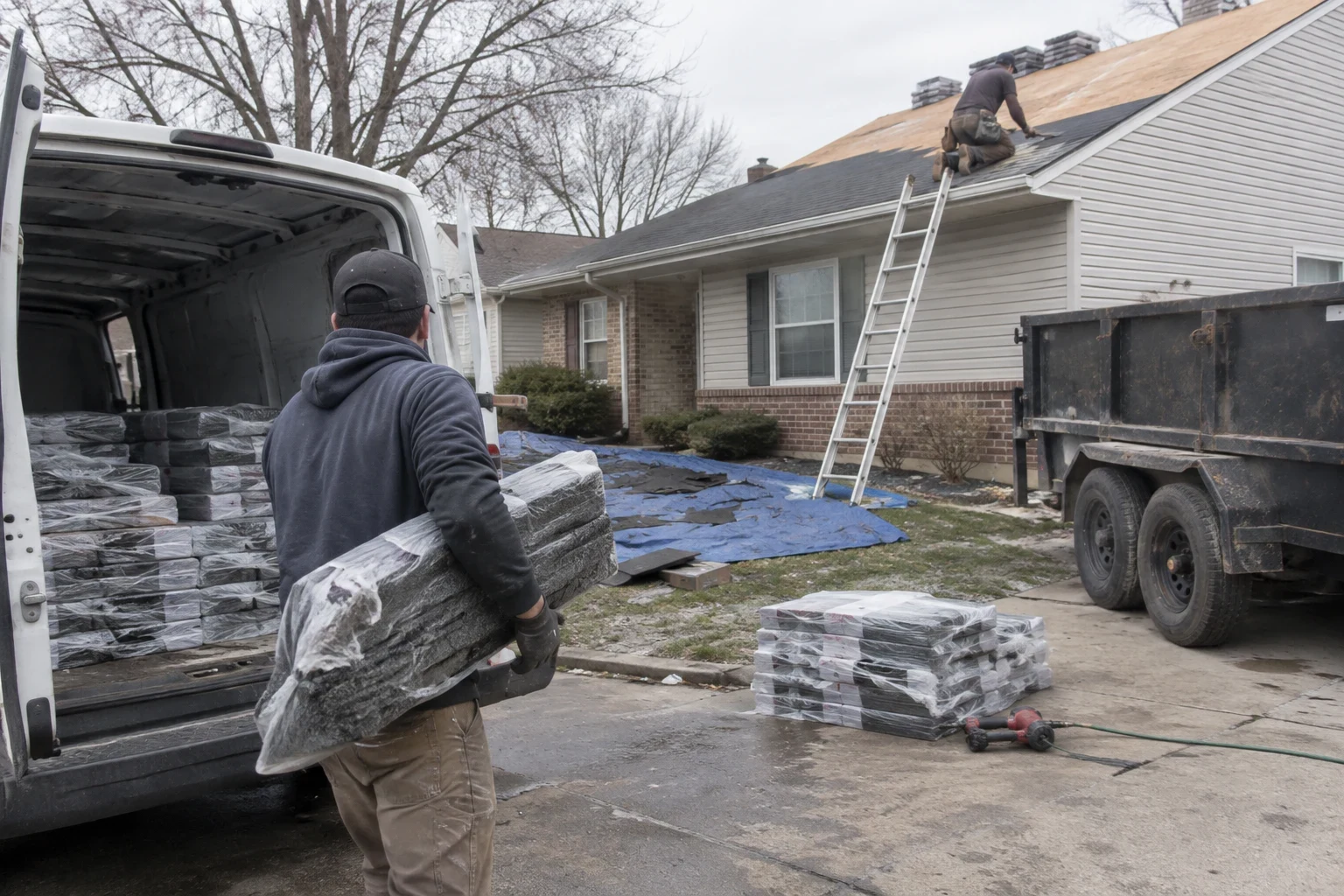
Common Questions About Roof Inspections
How much time does an inspection take?
On most homes, roughly an hour from beginning to end. A large roof cut up by dormers and valleys, or a leak with a hard-to-find source, can take longer. When you call, we give you an expected time window.
Does someone need to be home?
Yes, for part of the visit, because we need to get into the attic. Being there also lets you look through the photos with us and ask questions while everything is fresh.
Are you going to push a new roof?
No. Most of what we find is a cracked pipe boot, loose flashing or a few damaged shingles, all repair work. Replacement comes up only when wear runs across the whole roof or into the decking, and we show you photos as proof.
Will you inspect the roof of a home I'm buying?
Yes. A roof-specific inspection digs further than a general home inspection, including the underside of the decking and attic ventilation. You get a realistic sense of how much life the roof has left before closing.
What happens if the gutters or fascia are the problem?
We photograph it and include it in your summary. Spilling gutters and rotted fascia boards often come from drainage or airflow issues, which we take care of through our gutters and soffit and fascia services.
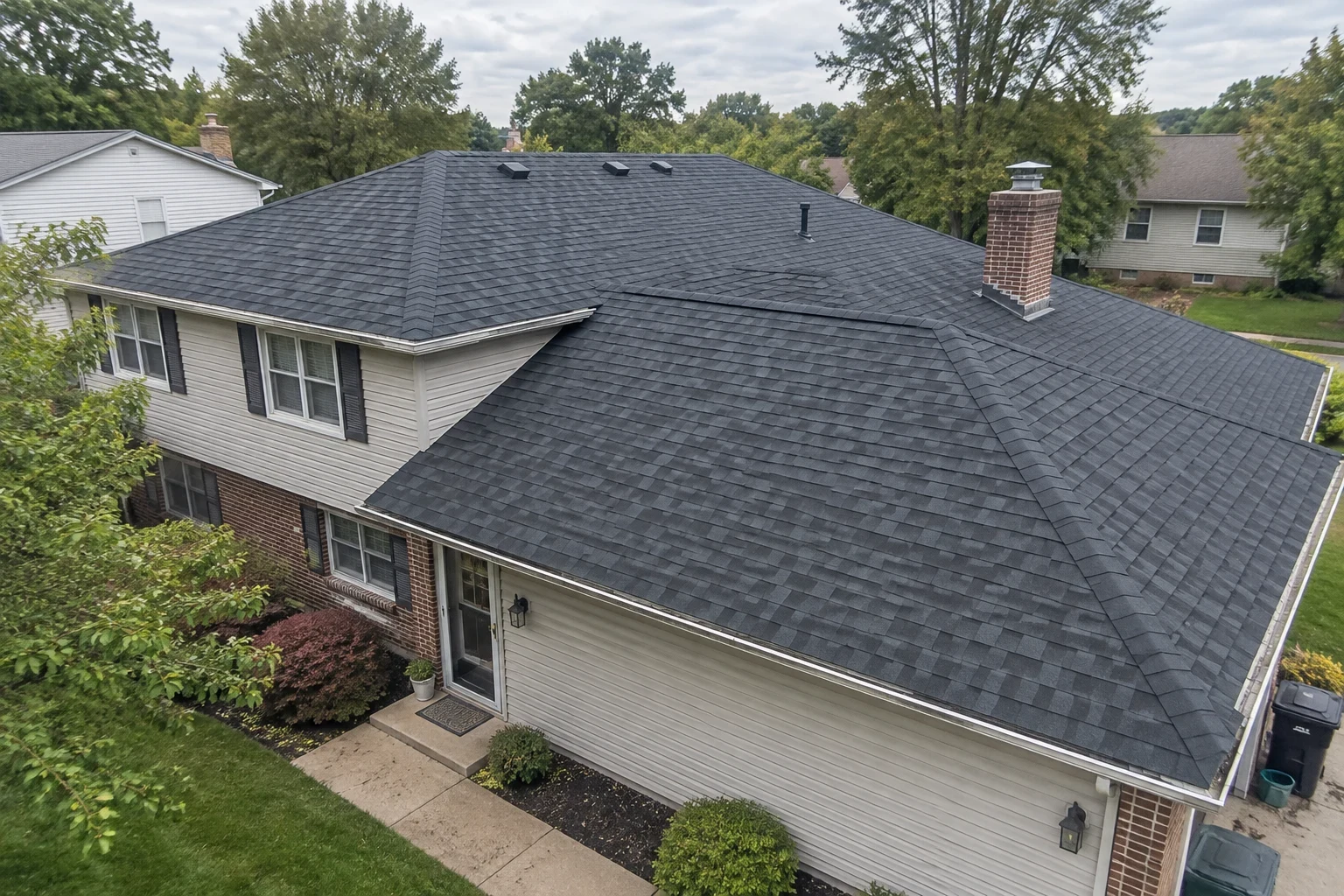
Get the Cause Pinned Down Before Anyone Quotes a Fix
Describe what you have noticed, from a ceiling stain to grit in the gutters, and we will find a time to go over the roof and the attic. The diagnosis comes first, then the conversation about repairs.