ServicesGutters
Gutters in Kingston, OH
An overflowing gutter is a symptom. The cause might be a clog, a sag that reversed the pitch, a downspout too small for the roof above it, or water running behind the gutter. We find which one it is, then repair or replace only what fixes it.
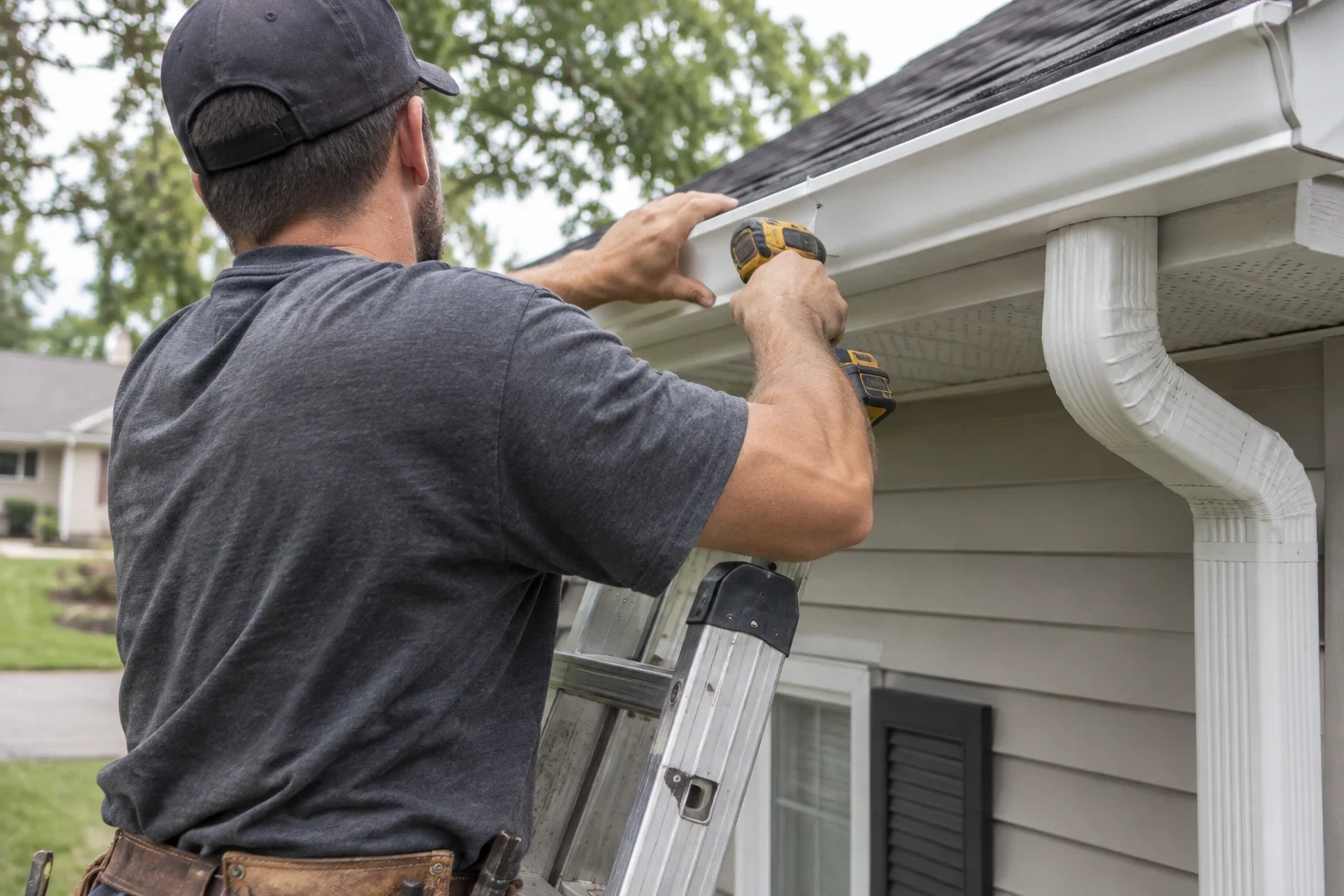
Gutter work that starts with where the water goes
Gutters exist to catch water at the roof edge and carry it far enough from your home that it never soaks the foundation or the fascia board. A failing system rarely announces itself at the gutter. You are more likely to notice a damp basement wall, paint lifting off the trim, or mulch washed out of the bed under the eaves.
So we trace the full route the water takes before changing anything. We put a level on each run, flush the troughs with a hose, check where the gutter tucks under the drip edge, and see where every downspout empties. Nearly every gutter complaint traces back to a handful of causes, and the correct repair depends on which one is at work on your home.
Central Ohio winters make this worse. Freeze-thaw cycles and the weight of ice tug hangers loose and pull seams apart, so fasteners and joints get a close look on every job.
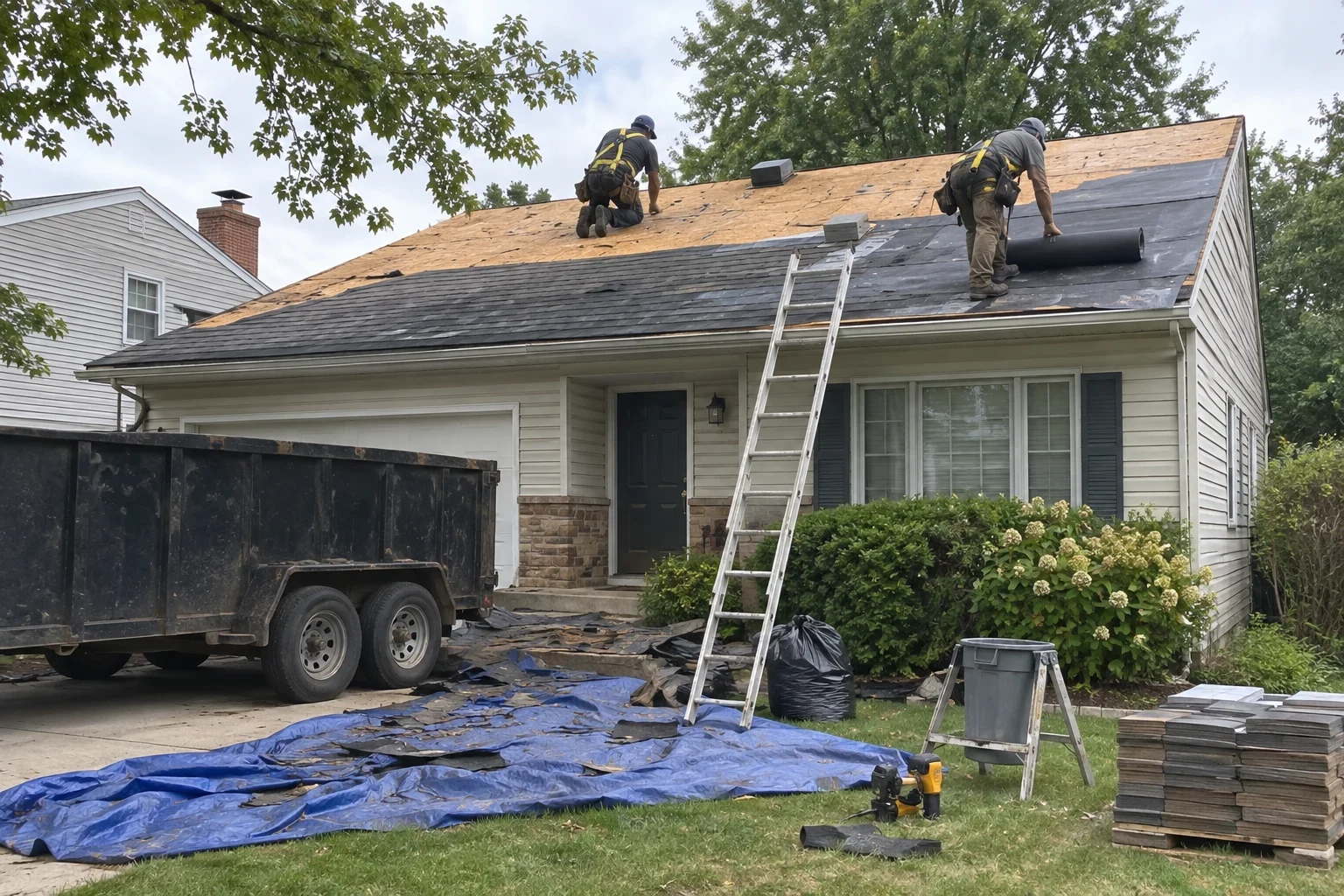
What our gutter service covers
- 01
Pitch and hanger correction
Gutters should drop roughly a quarter inch for every ten feet toward the outlet. We re-hang sagging sections with hidden hangers screwed into the fascia, not spikes that back out over time.
- 02
Seam, corner and end cap sealing
Leaks most often start at mitered corners and end caps where old sealant has dried and cracked. We clean those joints down to bare metal and reseal them.
- 03
Downspout sizing and placement
A large roof plane draining to one 2x3 downspout will overflow in a hard rain no matter how clean the gutter is. We add outlets or move up to 3x4 downspouts where the roof area calls for it, and add extensions to carry water away from the foundation.
- 04
Continuous aluminum replacement
When a run is too corroded, bent or undersized to save, we replace it with aluminum gutters formed in one piece to the length of the eave, in 5-inch or 6-inch K-style depending on the roof area and pitch. Fewer joints means fewer places for leaks to start.
- 05
Roof edge check
Water that runs behind the gutter usually means a missing or short drip edge or gutter apron. We check the edge detail and tell you if it needs attention.
Questions about Gutters?
Call(740) 660-6376Signs your gutters need attention
Overflow in moderate rain
If water spills over the front lip during an ordinary shower, the gutter is clogged, pitched the wrong way, or draining to a downspout that cannot keep up.
Standing water a day later
Water sitting in the trough after the rain stops means a low spot. Standing water speeds corrosion and freezes into a heavy block in winter.
Drips behind the gutter
Streaks on the fascia or water falling between the gutter and the wall points to a roof edge problem, not a gutter problem. Left alone, it rots the fascia board.
Gutters pulling away
A gap between the gutter and the fascia means hangers have loosened or the wood behind them has softened. We check which before reattaching anything.
Wet basement or eroded soil
Downspouts that empty right at the foundation put water exactly where you do not want it. This one is often fixed with extensions or relocated outlets rather than new gutters.
How a gutter job runs
- 1
A short phone conversation
Let us know what the water is doing and which part of your home it affects. Those details tell us whether we are likely dealing with a leak, a sag or a drainage shortfall, so we arrive prepared.
- 2
On-site diagnosis
We set a ladder, check the slope of each run, send water through every section and examine the fascia and drip edge. Problem spots get photographed, and we explain the cause in plain language.
- 3
Line-item estimate
Our written estimate lists repair and replacement separately. You see the cost of each option and the reasoning behind the one we recommend.
- 4
Install, test and clean up
Most gutter repairs and replacements are finished in a day or less. We protect the plantings under the eaves, haul away old metal and debris, and flush the system one more time before leaving.
What sets the price of a gutter job
The biggest variable is how much of the system has to change, followed by the condition of the wood the gutters hang from. Resealing a few joints and re-hanging one sagging run is a short visit. Tearing off every run and adding new downspouts takes more material and more hours. We tell you which category your job falls into before we put numbers on paper.
- Footage and roof height
- More linear feet means more material and labor. Second-story eaves and steep roofs also take longer to set up safely, which adds time.
- Gutter profile and downspout size
- Stepping up from 5-inch to 6-inch K-style or switching to 3x4 downspouts raises the material cost, but it is often the only real cure for overflow off a large roof plane.
- What the fascia looks like
- Hangers cannot hold in soft or rotted wood, so damaged fascia has to be fixed first. We price that under our soffit and fascia service and show it as its own line.
- Outlets, corners and extensions
- Every extra downspout, mitered corner and extension adds parts and labor to the total.
Gutter questions from Kingston homeowners
Should my gutters be repaired, or is it time to replace them?
If the metal is still solid and the trouble is a few open seams or loose hangers, repair usually makes sense. Runs that are rusted through, crushed, or undersized for the roof above them will keep failing however many times they get patched. We show you the photos from the visit so you can see exactly why we lean one way or the other.
My gutters are clean, so why does water still spill over the edge?
Clean troughs can still overflow when the slope runs back toward the wrong end, when the downspout is too small for the roof area it drains, or when a lower elbow is packed with leaves and shingle grit. We test for each of those during the visit, because another cleaning will not fix any of them.
Which gutter size does my home need?
Many homes do fine with 5-inch K-style gutters. Large or steep roof planes, and valleys that dump water into one corner, often need 6-inch gutters paired with bigger downspouts. We measure the roof area feeding each run before recommending a size.
Do you check the roof while you are working on the gutters?
We look at the shingles along the eaves and at the drip edge, since both control how water reaches the gutter. If we spot something farther up the slope, we point it out and suggest a roof inspection rather than guess at what is wrong.
What happens to the flower beds under my eaves?
We place ladders carefully, cover the beds below the work, and pick up old metal, screws and debris as we go. If a downspout needs a new discharge point, we settle the spot with you before we install it.
Find out why your gutters are failing
Tell us what you are seeing and where the water ends up. We will come out, find the cause and explain your options before any work starts.